The Ground Game is Back
In an era of fractured politics and collapsing trust, grassroots organising offers the left a path to victory.

The lesson from the Gorton and Denton by-election is clear: organising works.
Hannah Spencer won her seat not because she’s a polished, professional politician who dominates the TV debate. She won by having thousands of conversations on doorsteps, in community centres, outside schools and on high streets. She won because volunteers showed up, week after week, motivated not by careerism, but by a stubborn shared belief that change is possible.
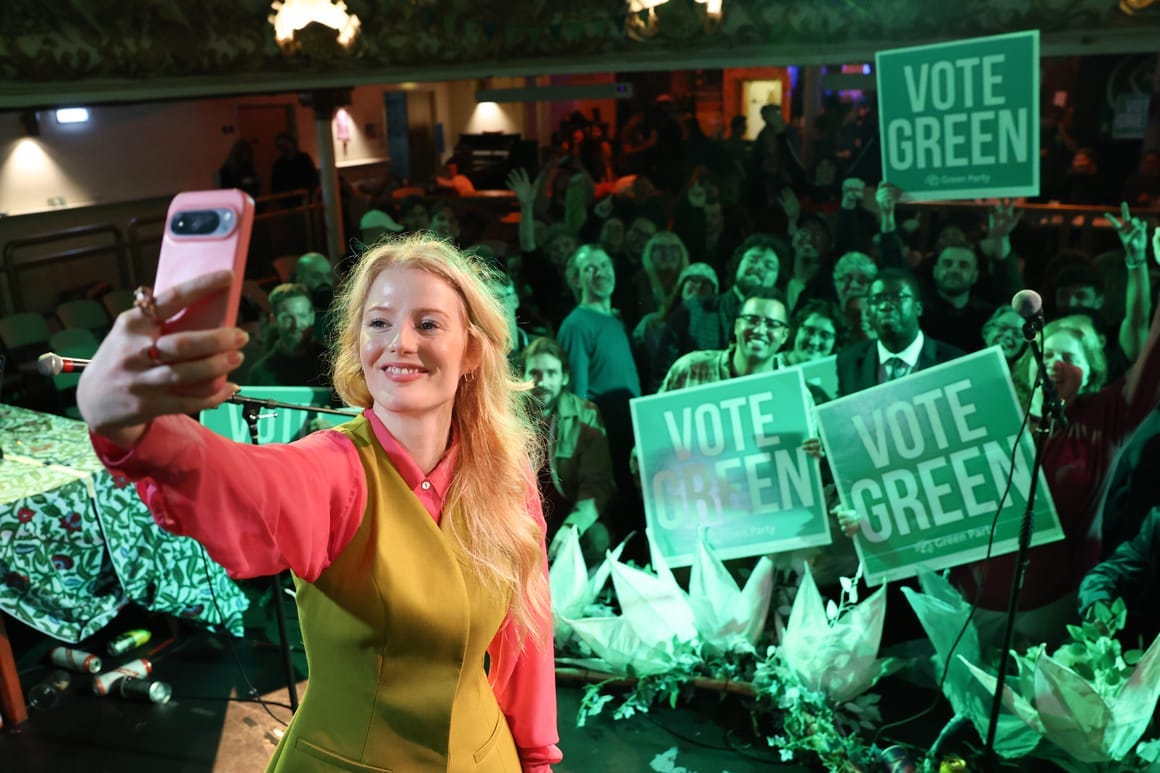
You’re not going to hear this argument anywhere in the mainstream press. Journalists will accuse Hannah Spencer of stoking up ‘sectarianism’ by appealing to peoples’ anger about the genocide in Gaza, or blame tactical voting websites for her victory. Gaza and tactical voting were important here – but the Greens were only trusted on Gaza, and selected as the tactical voting choice, because of their extraordinarily successful local campaigning.
You won’t hear the argument that the Greens won through grassroots organising because the received wisdom in Westminster is that it doesn’t work. Politicians in most major parties see the ‘ground game’ as a nice-to-have – a bit of democratic theatre to keep the membership busy while the real work happens on television screens and in the columns of tabloid newspapers.
But this view belongs to a political era that is now dead – one in which voters still felt some baseline trust in politicians and the media. Now, that trust is much harder to come by. And the only way to win it back is by listening.
Politics in the post-trust era
As poll after poll has showed, trust in political elites is at all-time lows. People are sceptical of polished messaging delivered from Westminster studios. They are tired of being addressed as demographic segments rather than human beings. When a politician appears on the television promising to fix everything, many voters understandably switch off.
In this context, real world conversations cut through much more than TV interviews, or even social media clips. These conversations provide people with something remarkably scarce in daily life in a capitalist society: respect and recognition. The simple but increasingly rare experience of being asked, face to face, what is actually going wrong in your community.
The Greens understand that politics has changed, and that put that understanding into practice in Gorton and Denton. Their campaign did not treat voters as passive recipients of a polished messaging strategy, but as participants in a shared political project. Campaigners showed up on doorsteps across the constituency to listen, as much as to talk.
Building power in a fragmented electorate
There’s another reason the ground game matters more than ever: British politics has fractured. We no longer live in a stable two-party system where elections swing on broad national tides. Now, there are at least three meaningful political blocs competing in many constituencies – sometimes more.
In a first-past-the-post system, fragmentation creates volatility. It produces tight local contests, in which outcomes hinge on small numbers of votes. Under these conditions, the difference between winning and losing doesn’t come down to a TV debate. It comes down to hard graft – identifying supporters, listening to their concerns, persuading the wavering, and getting your voters to the polling station.
Most of the big parties still treat the ground game as peripheral. They continue to see politics as a top-down, one-to-many process, in which they preach to voters from on high. Local organising is frequently under-resourced and undervalued. And they stubbornly refuse to listen to what voters actually want – at best, they will rely on a few focus groups asked questions carefully designed to elicit the ‘right’ answer.
The Greens are moving in the opposite direction – in part out of conviction, and in part out of necessity. Without the financial firepower of the larger parties and without guaranteed media attention, they have built a campaigning machine that relies upon their greatest strength: their motivated, disciplined volunteer base.
A volunteer army built on hope
Why were so many people willing to show up and fight for a Green victory in Gorton and Denton? Because there is an organised, passionate, and committed minority of people in this country who know that change is possible – and are willing to fight for it. Contests like this don’t just give us hope – they make us feel like we’re part of something bigger than ourselves.
That sense of community and solidarity is missing in so many of our lives. By design, we live in atomised, individualistic societies in which people are taught they have to compete with one another for survival. Neoliberal politicians like Thatcher and Blair sought to destroy the mass movements that transformed politics in the twentieth century so they could rule from the centre, unopposed.
They killed the era of mass politics, and replaced it with an elitist, professionalised politics, in which member participation was denigrated. As a result, party membership sank and engagement fell even further. At the same time, the other movements people once used to demand change withered – or were destroyed. We were left with isolated, lonely societies, in which it was harder than ever for people to exercise their collective power.
The Greens are offering a different kind of politics – one that provides people with a sense of solidarity, camaraderie, and agency. That’s why members keep showing up to fight for them – and this taste of victory is only going to make them more committed.
Why the Greens will keep winning
The next general election is likely to produce hundreds of tight three-way contests. In this context, the party able to mobilise the most committed volunteers, sustain the strongest local presence, and build the closest voter relationships will have a advantage.
Right now, that party is the Greens. At a time when trust is lacking and fear is plentiful, Green politicians and organisers are meeting voters where they are – and actually listening to them. That’s why they won in Gorton and Denton – and it’s why they’ll keep winning, all over the country.
Real power is built through human to human connection. There is no substitute for it.
F***ing YES! Grace. Amazing article, and WHAT a result! A swing from 14,000 at GE to 4,000 despite the hate filled and divisive opponents. Just epic. And, she's a plumber en-route to Westminster. What a day to smack supremacy culture in the face! #GetIn