
This week’s guest post is from Cass Hebron, Media and Narratives Officer for Oxfam International and Editor of The Green Fix, a climate justice newsletter for citizens who want meaningful system change.
“I work in narratives for post-neoliberal futures,” I tell the unsuspecting guy next to me at my friend’s party.
“Oh okay,” he says, in the polite tone of someone who has no idea what I’m talking about.
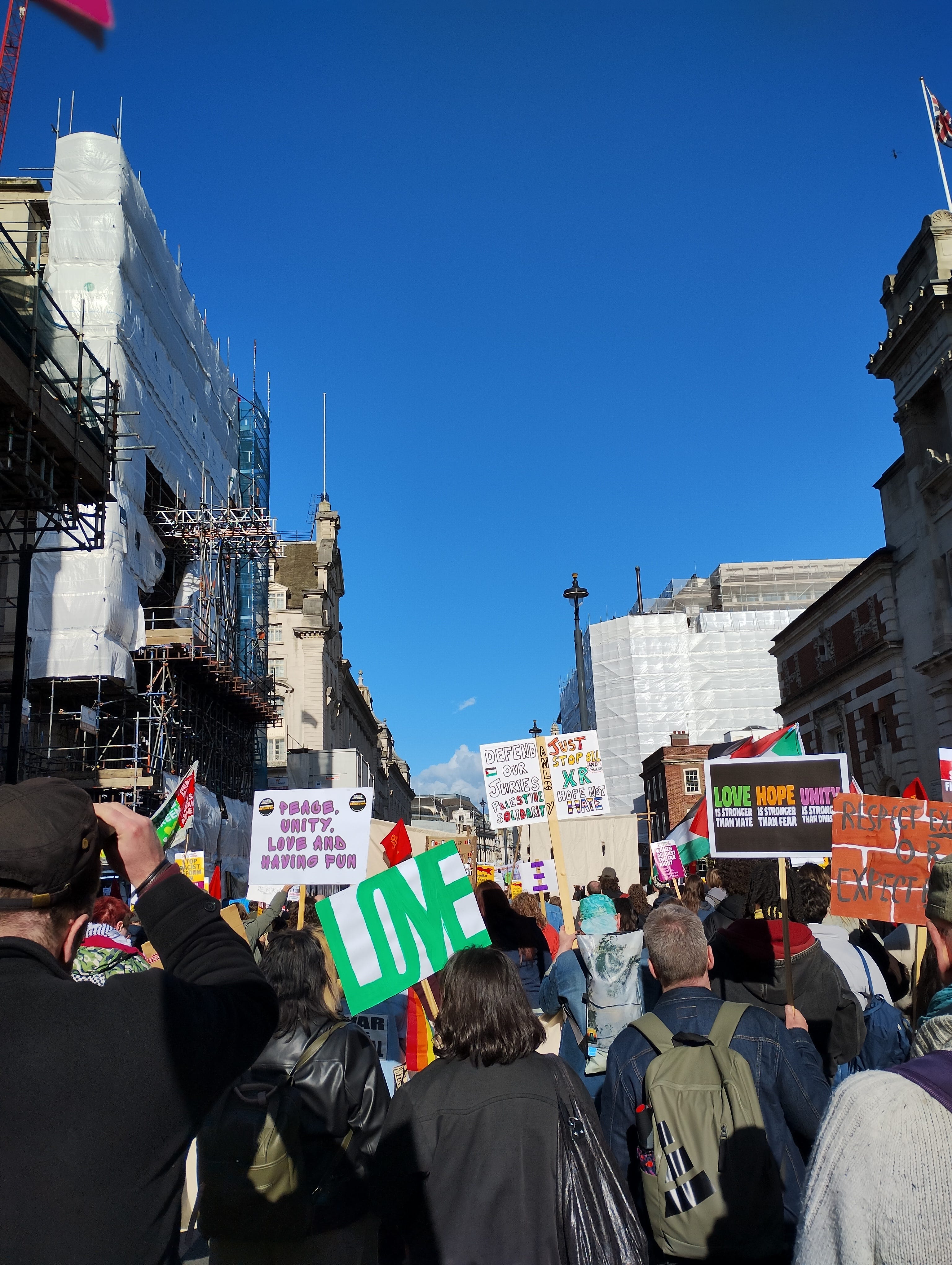
Leftist groups, particularly those involved in political advocacy like international NGOs and political parties, have their own language. We talk about transforming the economy and futures rooted in social justice. We share Instagram posts that say ‘Racial justice is climate justice’ and then wonder why the reach was low. We brandish words like intersectional approaches, gender-sensitive framing, and reshaping power structures as if they’re common conversational phrases.
It’s normal for each sector to have its own jargon and specialist vocabulary. The problem is that ‘the left’ isn’t a sector, and we’re trying to talk to people who don’t speak our language. The academic and abstract vocabulary of the political advocacy space is filtering down into our press releases, speeches and social media posts, and alienating the people we claim to want to include.
The stereotype of a leftist person as an over-intellectual, upper middle class, white person with an oat cappuccino doesn’t come from nowhere. Often our communications achieve little more than virtue signalling to our allies.
We can’t effectively engage new people in leftist ideas if we can’t explain them in ways they can understand. If you can’t present a vision for the future without resorting to the words transformative, reshaping or dismantling privilege, it sounds like that future is less of a tangible reality and more of an intellectual exercise.
The right, particularly the far-right, communicates in a way that connects with the identity and emotions of the voter (albeit with the help of misinformation campaigns, media monopolies, and the financial backing of fossil fuel corporations). The rise of the far-right has been tied to growing disillusionment with mainstream political parties and the feeling that politicians don’t share the struggles of ‘ordinary people.’
In a debate before the Makerfield by-election, Reform UK candidate Robert Kenyon said we need to “get normal people in politics, people who care about the place, people who live in the place and people who want to stay here and not use it as a stepping stone for other things”.
Research agency More in Common found that 20% of the UK population fall into a category they called ‘dissenting disruptors’: people who live in low-income areas and feel disconnected from current politics. The majority of this group feel that free speech is under threat, and nearly half believe that ordinary people understand the problems the country faces better than the experts.
The people in this group who vote Reform UK (if they vote at all) praise Nigel Farage for his straight-forward style of talking and saying what he thinks.
The left should pay attention. The language we use has fast become an identity marker that separates us from the majority of people, rather than a tool for breaking down barriers and building a movement.
Philosopher Slavoj Žižek has been critical of the concept of political correctness, which he claims is a tool that shields us from addressing inequalities and oppression by instead policing how we speak about them. The far-right take this sentiment to an extreme, erasing all nuance and promoting the rise of hate speech and violence against women, immigrants and any social group they can use as a scapegoat.
But what is the left doing, beyond criticising the right and closing ranks in an exclusionary bubble that preaches tolerance while rejecting anybody who doesn’t use the right words? Letting go of our linguistic elitism is one crucial step towards improving the way we communicate.
We don’t need to stop holding our conferences on ‘postmodern ecologies’ and ‘radical imaginaries’. But, at some point, we do need to say what we’re actually talking about.
I cannot picture a ‘post-neoliberal society rooted in fairness.’ But tell me that I could wake up each day and hear birds outside my window again, and that I can cycle safely to work on clearly-marked bike lanes. Tell me about a world where the rise of job-shares and redistributed wealth means that I only have to work 20 hours a week and finally have the time to make doctor’s appointments, check up on my friends and neighbours, read books and get involved in local issues. Tell me that I won’t worry about who made my clothes or prepared my food, because supply chains are more local now, and regulations on environmental and human rights standards have been implemented to make sure nobody is being exploited behind the scenes.
The views of the progressive left and the ‘dissenting disruptors’ have more in common than we might think. Both share a hatred for corporate monopolies and a belief that much of politics is governed by a self-serving corrupt elite. What other things will we find we have in common if we start speaking the same language?
Cass Hebron is Media and Narratives Officer for Oxfam International and Editor of The Green Fix, a climate justice newsletter for citizens who want meaningful system change.
